With more streaming platforms, social media channels, search ads, and digital targeting tools available than ever before, it is easy to assume traditional television advertising has become outdated.
It has not.
The way people watch television has changed, but video remains one of the most powerful ways for businesses to build awareness, credibility, and recognition.
In 2026, the smartest media strategies are not necessarily abandoning television.
They are using it more intentionally.
Here is why television advertising still matters.
TV Still Delivers Broad Reach
One of television’s biggest advantages has always been its ability to reach large audiences.
That remains valuable.
Many businesses do not serve an extremely narrow customer base.
Think about industries such as:
- Roofing
- HVAC
- Automotive
- Insurance
- Healthcare
- Banking
- Restaurants
- Home services
- Retail
- Professional services
For these businesses, broad local awareness can be a major advantage.
You may not know exactly when someone will need a new roof, replace a vehicle, change insurance providers, or call an HVAC company.
But you can work to make sure your business is one of the names they recognize when that moment arrives.
That is where television can be especially powerful.
Brand Recognition Still Matters
Advertising does not always create an immediate sale.
Sometimes its job is to make a business familiar.
A customer may see your television commercial several times before they ever need your service.
Then something happens.
Their air conditioner stops working.
They need a new vehicle.
They begin looking for insurance.
They need a contractor.
At that point, they are more likely to notice a company they already recognize.
Television can help build that familiarity over time.
The goal is not simply to generate an immediate response from every viewer.
The goal is to become memorable enough that your business enters the conversation when the customer is ready to buy.

TV Creates a Different Kind of Presence
There is still something different about seeing a business on television.
A professional video ad can make a company feel established.
The combination of sight, sound, motion, people, and storytelling gives businesses an opportunity to communicate more than a simple text advertisement can.
A television commercial can show:
- Your people
- Your locations
- Your products
- Your work
- Your personality
- Your community involvement
- Your expertise
For local businesses, this can be especially valuable.
Viewers are not just hearing about a company.
They are seeing the people they may eventually call, visit, or hire.
Local TV Can Build Community Familiarity
Local businesses compete differently than national brands.
Your customers may see your employees at the grocery store.
They may know your customers.
They may drive past your office.
They may recognize your trucks.
They may see your sponsorships around town.
Television can reinforce that community presence.
A commercial featuring real employees, recognizable locations, or local messaging can help a business feel more familiar and accessible.
That local recognition can be difficult to replicate with generic national advertising.
For businesses that depend heavily on reputation and word of mouth, visibility matters.
Television and Streaming Are Not Opposites
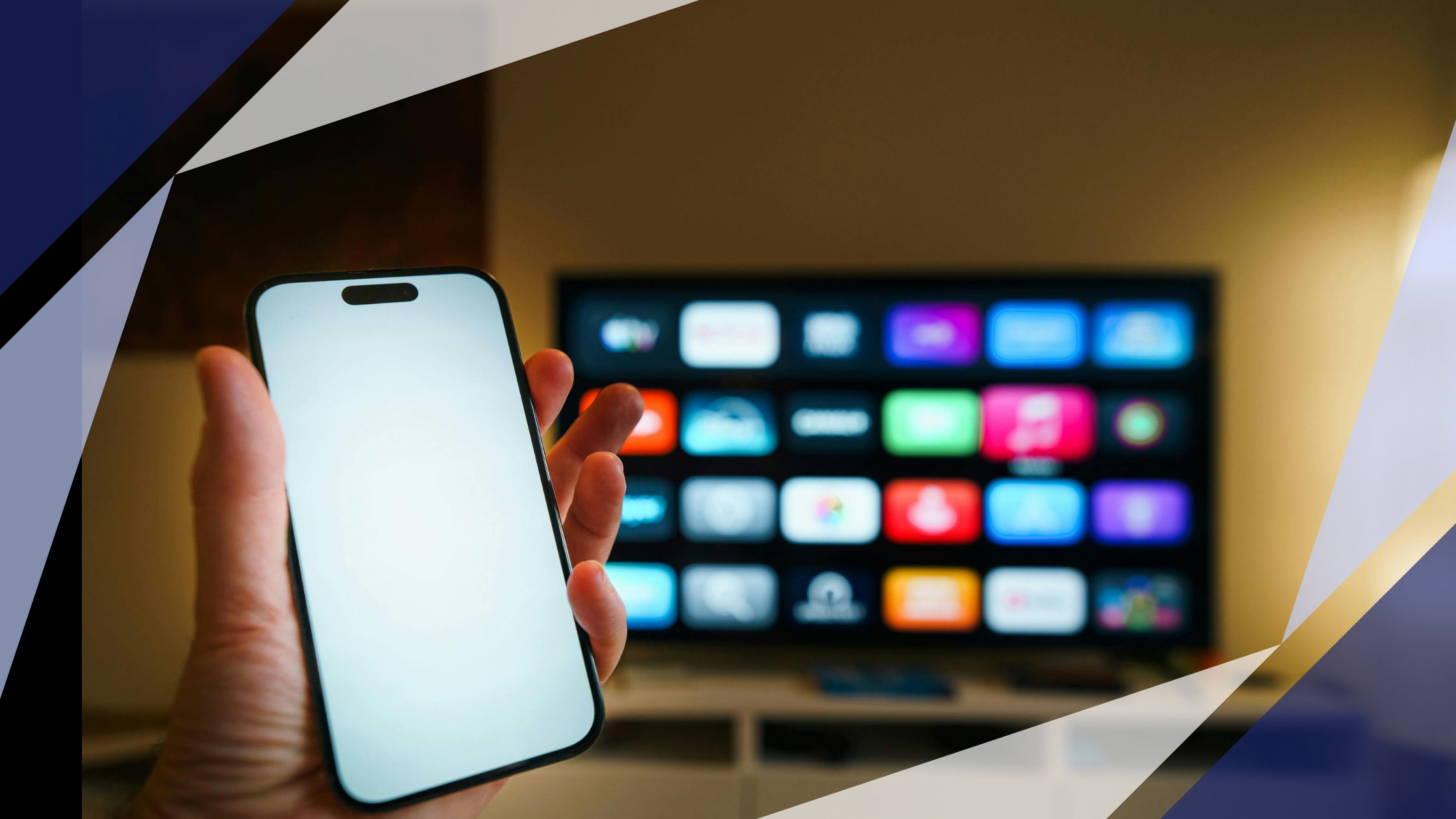
One of the biggest changes in media is that television is no longer just one thing.
People watch video through:
- Broadcast television
- Cable
- Smart TVs
- Streaming apps
- Connected TV devices
- Mobile devices
- Computers
The viewing experience has become fragmented.
That does not mean video advertising has become less important.
It means businesses have more ways to distribute it.
A company might run a commercial on traditional broadcast TV while also using the same creative across connected TV and streaming platforms.
Instead of asking whether television or streaming is better, businesses should ask:
Where is our audience watching, and how can we build enough reach and frequency across those environments?
That is a much more useful question.

TV Works Well With Digital Advertising
Television does not have to operate by itself.
In fact, some of the strongest campaigns use TV to create awareness and digital channels to capture demand.
Imagine someone sees your television commercial several times.
Later, they need the service you provide.
They search Google.
Your search ad appears.
They visit your website.
They see your company again on social media.
Those exposures reinforce one another.
Television can introduce the brand.
Search can capture active intent.
Social can maintain visibility.
Streaming can extend the video message.
The strongest strategy is often not about finding one perfect channel.
It is about making multiple channels work together.
Video Is Still a Powerful Storytelling Tool
People remember stories, faces, sounds, and visuals.
Video gives businesses the ability to combine all of those elements.
You can show a process.
Introduce your team.
Demonstrate a product.
Highlight a customer experience.
Explain why your service is different.
Build emotional connection.
A good commercial can communicate a surprising amount of information in 15 or 30 seconds when the message is focused.
That is one reason video remains such an important part of modern advertising.
TV Can Make Other Advertising More Effective
Customers rarely experience advertising in a straight line.
They might see a TV ad, hear a radio spot, search the company online, read reviews, visit the website, and then make a phone call.
That means the impact of television may not always appear as an immediate response directly tied to the commercial.
Instead, TV can improve overall awareness and make other marketing efforts more effective.
If people already recognize your name when they see your search ad, that familiarity may help.
If they have seen your commercial before visiting your website, the business may feel more credible.
Marketing channels do not exist in isolation.
Frequency Still Matters
One advertisement rarely changes consumer behavior.
People need repetition.
The exact amount depends on the campaign, audience, creative, and market, but the principle remains the same:
People need enough opportunities to see your message before they are likely to remember it.
This is true for television.
It is also true for streaming, social media, search, radio, and digital display.
A common mistake is spreading a budget across too many channels without putting enough weight behind any of them.
Sometimes a more focused media plan can create stronger awareness than trying to appear everywhere at once.
The question is not simply how many platforms you can afford.
It is whether your campaign has enough presence to actually be noticed.
Good Creative Matters More Than Ever
TV advertising still works, but that does not mean every TV commercial works.
Consumers are exposed to an enormous amount of content.
That makes weak creative easier to ignore.
A good television ad should:
- Get to the point quickly
- Focus on one primary message
- Clearly identify the brand
- Show the business when possible
- Speak to the customer
- Give the viewer a reason to care
- Include a logical next step
The media placement matters.
But the message matters just as much.
A great placement cannot rescue an advertisement that nobody remembers.
TV Is Not Right for Every Business
Television can be powerful, but it should never be purchased simply because it is available.
A business with a highly specialized audience may find that other channels deserve a larger share of the budget.
A company serving a very small geographic area may not need broad-market television exposure.
A business without the budget to maintain meaningful frequency may need to start elsewhere.
That is why media planning matters.
The right question is not:
“Should every business advertise on TV?”
The better question is:
“What role, if any, should television play in this business’s overall marketing strategy?”
For many companies, the answer will still be significant.
TV in 2026 Is Part of a Bigger Video Strategy
Television advertising has changed.
The media landscape is more complex.
Audiences are more fragmented.
There are more screens, more platforms, and more ways to buy video advertising.
But the fundamental value of video has not disappeared.
Businesses still need awareness.
They still need recognition.
They still need customers to remember their names.
They still need ways to demonstrate who they are and why people should choose them.
Television can still do those things.
The difference in 2026 is that TV should rarely be evaluated by itself.
Broadcast television, OTT, CTV, search, social, and digital media can all play different roles in the same strategy.
The goal is not to use TV because it worked 20 years ago.
The goal is to use it when it still makes sense for the audience you are trying to reach today.
And for many local businesses, it does.
About Branding Iron Management
Branding Iron Management is a dedicated media management company based in the Bryan-College Station area, boasting over 60 years of experience. Proudly hiring talent from Texas A&M University, our team is comprised almost entirely of Aggies, reflecting our commitment to helping local businesses.
We specialize in helping businesses grow through tailored media strategies, digital marketing, graphic design, and social media management. Our comprehensive marketing management services simplify the complexities of advertising, enabling you to effectively engage your target audience and achieve your business goals. At Branding Iron Management, we are in the business of helping businesses grow. Call at (979) 571-9919 or email Branding Iron Management for a free consultation today.
Follow us on social media!